
 630-871-2400

Does an Order of Protection Affect Gun Rights in Illinois?
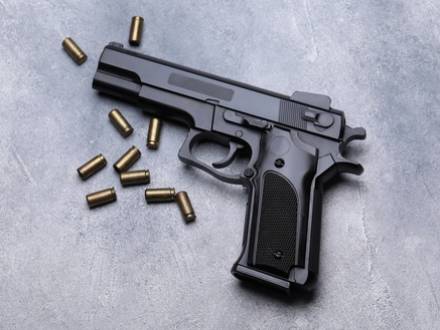 If you get an order of protection against an abusive partner or family member in Illinois, that order may immediately affect that person’s gun rights. When an order prohibits the respondent from possessing firearms, the respondent must surrender covered firearms and may lose the ability to use their Firearm Owner’s Identification (FOID) card.
If you are seeking safety from domestic violence in 2026, a DuPage County, IL protective order attorney can walk you through the steps of getting an order of protection and ensuring the firearm rules are enforced.
Will My Abuser Lose Their FOID Card If I Get an Order of Protection?
Removing firearms quickly can be critical, since guns play a role in most intimate partner homicides. CDC research looked at intimate partner homicide cases among women, and firearms were the method of injury in about two-thirds of cases where a current or former partner killed a woman.
To address this, Illinois lawmakers passed a 2025 update to the law known as Karina's Law, which closed a major gap in enforcement. Before the update, a respondent could hand off guns to a friend or relative instead of giving them to police. Now, firearms covered by the order generally must be surrendered to law enforcement. When the petitioner requests a search warrant and the court makes the required findings, the court must issue a warrant authorizing law enforcement to search for and seize the firearms.
Under the Illinois Domestic Violence Act 750 ILCS 60/214, an emergency, interim, or plenary order may prohibit the respondent from possessing firearms when the legal requirements are met. A respondent who is prohibited from possessing firearms must surrender covered firearms, their FOID card, and any concealed carry license. The petitioner should tell the court about any firearms and request firearm-related relief when applying for the order.
What Happens to My Abuser's Guns When the Order Prohibits Firearm Possession?
Once the court grants the order of protection, the process for removing firearms usually follows these steps:
-
Officers take any weapons the respondent has on them or at the location where they are served.
-
The respondent must turn in any other firearms to local police within 24 hours.
-
Officers give the respondent a receipt that lists everything collected.
-
The respondent's FOID card and any concealed carry license are sent to the Illinois State Police for safekeeping.
Law enforcement holds onto these firearms for as long as the order stays in effect. An emergency order can last between 14 and 21 days, an interim order up to 30 days, and a plenary order up to two years, with the option to renew. When the order ends, the respondent can request the return of their firearms and the return or reinstatement of their FOID card, as long as they are legally allowed to possess firearms.
What Should I Do if My Abuser Won't Give Up Their Guns After I Get an Order of Protection?
If the respondent does not surrender their firearms as required, report it to local law enforcement so they can act on the order. A respondent who does not surrender their firearms in time can face serious consequences. Police can seek a search warrant to find and remove any weapons, and a violation of the order itself can also lead to criminal charges. A violation of an order of protection is generally a Class A misdemeanor, but it can become a Class 4 felony if the respondent has certain prior convictions.
Even with these protections, an order of protection cannot guarantee your safety by itself. If you believe the other party still has access to a firearm, contact the police. Do the same if you fear for your safety at any point and do not rely only on the paperwork. Pairing your legal order with a personal safety plan gives you more than one layer of protection.
Contact a Wheaton, IL Protective Order Attorney for a Free Consultation
If you are dealing with domestic violence and need to understand your options for firearm safety, Fawell & Fawell is ready to help. Attorney Alex Fawell brings 10 years of legal experience, and his background includes work as a federal judicial clerk and as a law clerk licensed under Illinois Supreme Court Rule 711. Contact a DuPage County, IL order of protection lawyer today for a free consultation. Call 630-871-2400.





FREE CONSULTATIONS
630-871-2400
Office Location
2100 Manchester Road
Building B, Suite 912
Wheaton, IL 60187
MAP + DIRECTIONS [+]
Follow Us