
 630-871-2400

What Happens to Your Divorce Agreement When Illinois Law Changes?
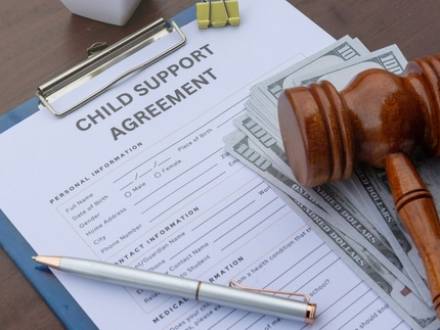 If you finalized your divorce, you have already reached a settlement and moved on. Then perhaps you heard that Illinois changed its child support guidelines, or that some other element of state or federal law has changed. Now you are wondering: Does that change my order? Do I have to go back to court?
A Wheaton family law attorney can walk you through how changes to Illinois law affect your situation. But the key point is this: A change in the law does not automatically change your existing court order. Here is what you need to know in 2026. In this blog, we’ll take a look at a child support order as an example.
Does a New Illinois Law Automatically Change My Divorce Order?
In Illinois, a divorce order stays in effect until a court officially changes it. This is true for child support, alimony (called "maintenance" in Illinois), and parenting time. A new law does not rewrite your order on its own.
Many people assume that a statutory update means their old order is outdated. It does not work that way. Your order stays in place unless one side asks a judge to change it and the judge agrees.
A new law can be a factor in a modification hearing. But the burden is on you to show that your situation warrants a change. Illinois state precedent has generally held that a change in the statute by itself is not considered a "substantial change in circumstances," so the law changing alone usually is not enough to reopen an existing support order.
What Has Changed in Illinois Child Support Law?
About 10 years ago, Illinois moved to an "income shares" model under 750 ILCS 5/505. Instead of using a flat percentage of one parent’s income to calculate child support, courts now look at both parents’ incomes and estimate what they would spend on the child together. Orders entered before 2017 may look very different from what a court would order today.
The Illinois DHFS Division of Child Support Services updates the income shares schedule to reflect changes in economic data. Illinois must complete its next full review of the child support guidelines in 2026, and that review can lead to larger changes than the smaller updates made each year. This quadrennial review, which happens every four years, takes a deeper look at the formula itself and can lead to more significant changes than the yearly updates.
If your child support order is several years old, today's guidelines might produce a different support amount. But that gap alone does not change your order. A court still has to act.
When Can You Ask for a Modification to Your Divorce Decree?
You can request a modification when there has been a substantial change in circumstances, but only certain things like child support and custody can be changed. Property division is almost never modified. When deciding whether to modify child support, for example, courts will consider things like:
- A significant increase or decrease in either parent's income
- Changes in a child’s needs
- A change in how much time the child spends with each parent
- Whether at least three years have passed since the last child support order and, and whether there is a 20 percent or more gap between the current amount and what today's guidelines would produce
That last point is important. Illinois law also allows a review after about three years. If a parent receives child support services through the Illinois Department of Healthcare and Family Services and the guideline amount would be at least 20 percent different from the current order, the court may allow a modification request without requiring proof of a major life change. This gives you a clear legal path to request a change without proving a major life event.
What About Alimony? Can Illinois Law Change My Maintenance Order?
In 2019, Illinois updated the formula used to calculate maintenance. Under 750 ILCS 5/504, courts generally calculate maintenance by taking 33.3 percent of the paying spouse’s gross income and subtracting 25 percent of the receiving spouse’s net income, with the total capped at 40 percent of the couple’s combined net income.
If your order was entered before 2019, the new formula does not apply automatically. You still need to show a substantial change in circumstances, such as a job loss, retirement, or the remarriage of the person receiving support. The 2019 formula change alone is not enough to reopen your order.
Can Parenting Time Orders Be Changed?
Parenting time cases follow a different standard. Under 750 ILCS 5/610.5, a court can change a parenting time order if there has been a meaningful change in circumstances and the change would serve the child’s best interests. A change in state law is not required. Common reasons parents seek a modification include:
- A parent moving to a new location.
- A major change in a parent's work schedule
- The child's evolving needs as they get older
- Concerns about the child's safety or well-being
Call a Wheaton, Illinois Family Law Attorney Today
If you have questions about modifying a child support, maintenance, or a parenting time order, speaking with an experienced lawyer can make a real difference. That is where the experienced DuPage County, Illinois family law lawyer at Fawell & Fawell comes in.
Alex Fawell has 10 years of legal experience and takes a practical, results-oriented approach to every case. Your family is our priority. As a solo attorney, he handles every case personally. His background includes a federal judicial clerkship for the Honorable John Darrah and 711 law clerkships for both the DuPage County and Cook County Public Defender's offices.
Fawell & Fawell offers free consultations. Call 630-871-2400 today.





FREE CONSULTATIONS
630-871-2400
Office Location
2100 Manchester Road
Building B, Suite 912
Wheaton, IL 60187
MAP + DIRECTIONS [+]
Follow Us